
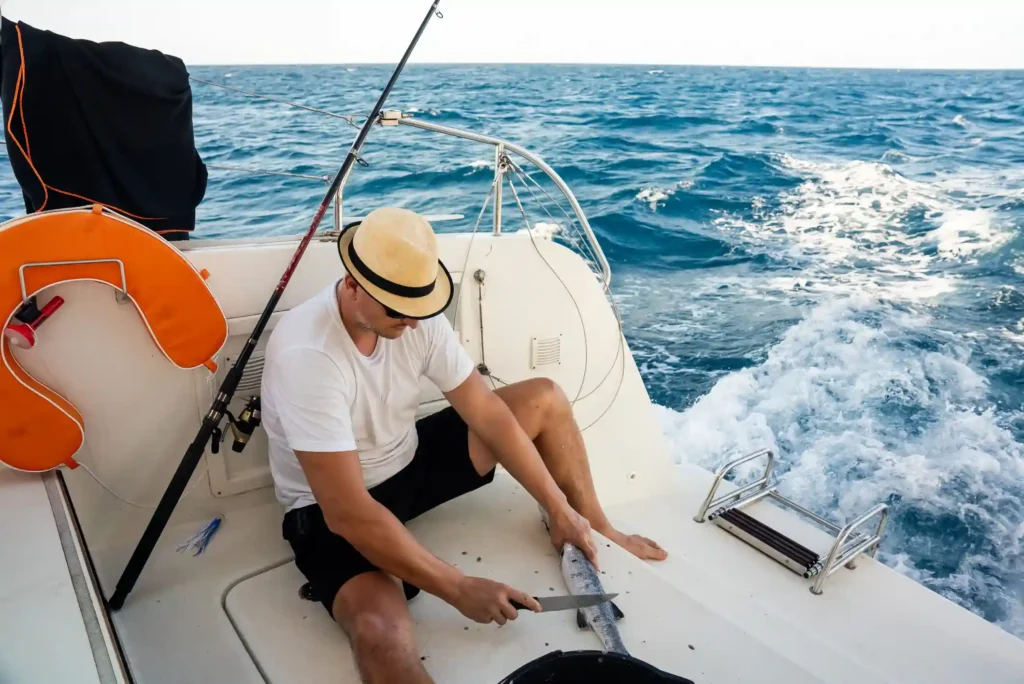
A fishing charter in Fort Lauderdale is a captained fishing boat rental for offshore or inshore trips, typically including fishing gear, bait, and local knowledge of where fish are running that day.
Lauderdale Charters offers fishing trips separate from our sightseeing and celebration charters, suited to both experienced anglers and first-timers who just want to try their luck on the water.
Fishing Charter Fort Lauderdale
Fort Lauderdale sits at the edge of the Gulf Stream, one of the most productive fishing corridors on the entire Atlantic coast, which is why the city calls itself the “Yachting Capital of the World” and backs it up with a serious sport-fishing scene.
If you’ve been comparing fishing charter fort lauderdale options and finding mostly generic listings with no detail on what’s actually included, here’s a straight answer on what to expect and how to choose the right trip.
Offshore vs. Inshore: Which Fishing Charter Do You Need?
The single biggest decision in booking a Fort Lauderdale fishing charter is offshore versus inshore, and the two trips target completely different fish and require different boats and travel time.
Offshore charters head out past the reef line toward the Gulf Stream, targeting species like mahi-mahi, sailfish, tuna, and wahoo. These trips run longer — often a half-day (4 hours) or full-day (8 hours) — since reaching productive offshore water takes travel time. Offshore fishing tends to appeal to anglers chasing bigger, more prized catches and who don’t mind more open-water conditions.
Inshore charters stay closer to shore, fishing the Intracoastal, nearby flats, and structure close to the coastline for species like snook, redfish, and snapper. These trips are shorter, calmer, and generally a better fit for beginners, families, or anyone who prefers to stay in more protected water.
If you’re not sure which is right for your group, tell your captain your experience level and what you’re hoping to catch — that alone usually settles the decision.
What’s Included on a Fishing Charter
A fishing charter through Lauderdale Charters is captained and equipped, meaning you don’t need to own or bring your own gear. Typical inclusions are:
- Fishing rods, reels, and terminal tackle appropriate to the trip type
- Bait (live or cut, depending on target species)
- Local knowledge of current conditions, recent catches, and productive spots
- Coolers for your catch (bring your own ice if you plan to keep fish)
- Safety equipment and a licensed captain
Fishing licenses in Florida are typically covered under the charter boat’s license when fishing with a captain, but confirm this detail with your booking contact — regulations occasionally shift by season and species.
Who Fishing Charters Are Best For
Fishing charters draw a genuinely wide range of guests:
- Experienced anglers looking for local Gulf Stream access without owning a boat
- Visitors wanting a Fort Lauderdale activity that isn’t a beach day or a party cruise
- Families introducing kids to fishing in calmer inshore water
- Groups celebrating a birthday or bachelor outing who want an activity-based charter instead of a lounging one
- Solo travelers or small groups looking for a more hands-on day on the water
If your group is more interested in the boat itself than the fishing — sunbathing, swimming, drinks, music — our pontoon and party boat rentals are built for that instead.
Ready to get out on the water with rods in hand? Check fishing charter availability with Lauderdale Charters →
Best Time of Year for Fort Lauderdale Fishing
Fishing in South Florida runs year-round, but different species peak at different times:
- Sailfish: Best from December through March, during the winter sailfish migration
- Mahi-mahi: Peaks in late spring through early summer
- Snook and redfish (inshore): Strong through spring and fall, with some seasonal closures to be aware of
- Tuna and wahoo: Most consistent in the cooler months, similar to sailfish season
If you have flexibility on dates and a specific species in mind, ask your captain which window gives you the best shot before locking in a date.
What to Bring
Sun protection matters more on a fishing trip than almost any other charter type, since you’ll likely be out in open exposure for hours. Bring:
- Polarized sunglasses (also genuinely useful for spotting fish)
- A hat with a brim, and reef-safe sunscreen reapplied throughout the day
- Non-slip, closed-toe shoes if possible
- A light jacket for early morning departures, which run cooler than midday
- Your fishing license if you have your own (confirm with your captain if this is needed)
Chartering vs. Renting Your Own Fishing Boat
Some anglers, particularly those with their own boating experience, consider renting a boat and fishing on their own rather than booking a captained charter. For Fort Lauderdale specifically, a charter tends to be the better choice for anyone without deep local knowledge of the area’s waters.
Offshore fishing near the Gulf Stream involves navigating real distance and changing conditions that a local captain reads instinctively but a visiting angler would be guessing at. Inshore fishing similarly depends on knowing which flats, channels, and structure are holding fish on a given day — information that shifts with tide, season, and recent fishing pressure, and that a full-time local captain tracks far more closely than an occasional visitor could.
Beyond the practical fishing knowledge, a charter also removes the liability, licensing, and navigation responsibility that comes with operating a boat in unfamiliar water.
Local Fishing Areas Near Fort Lauderdale
Depending on your trip type, Lauderdale Charters fishing trips typically range across a few key areas.
Nearshore and inshore trips work the Intracoastal Waterway, the flats near Port Everglades, and structure around local bridges and channels — all within a shorter run from the dock. Offshore trips head out through the inlet toward deeper water and the edge of the Gulf Stream, which sits closer to shore off Fort Lauderdale than in many other parts of Florida, making it one of the more accessible deep-water fishing grounds on the East Coast.
Your captain will choose the specific spot based on current conditions, recent reports, and your stated goals for the trip.
Local Species Guide
Understanding what’s realistically biting on a given trip helps set expectations before you head out. Here’s a general breakdown of what Fort Lauderdale anglers typically target by trip type and season:
| Species | Trip Type | Peak Season |
|---|---|---|
| Sailfish | Offshore | December–March |
| Mahi-mahi | Offshore | Late spring–early summer |
| Wahoo | Offshore | Fall–winter |
| Tuna | Offshore | Winter–early spring |
| Snook | Inshore | Spring and fall (check seasonal closures) |
| Redfish | Inshore | Year-round, strongest spring/fall |
| Snapper | Inshore/nearshore | Year-round |
Your captain will confirm what’s actually been biting in the days leading up to your trip — published seasonal patterns are a helpful general guide, but real-time local conditions matter more than the calendar on any given day.
Catch and Release vs. Keeping Your Catch
Florida has specific regulations around size limits, bag limits, and seasonal closures that vary by species, and these rules exist to keep local fish populations sustainable for the long term. Your captain will keep you within current regulations automatically, but if keeping your catch matters to you — for a fish fry that night, for example — mention that at the start of the trip so your captain can prioritize legally keepable species accordingly.
Many anglers, particularly on catch-and-release-focused trips, are just as happy releasing everything after a good fight and a photo; let your captain know your preference so the trip is planned around what you actually want out of it.
First-Time Angler Tips
If this is your first real fishing trip, a few things help set realistic expectations: fishing involves genuine waiting between bites, even on a good day, so come with patience rather than an expectation of constant action. Seasickness risk is generally similar to any boat trip, though the stop-and-drift pattern of fishing can affect some guests differently than steady cruising — over-the-counter remedies taken well before departure are worth considering if you’re prone to motion sensitivity.
And don’t worry about looking inexperienced; your captain and crew handle baiting, casting guidance, and reeling-in assistance for guests who are new to the sport.
Combining Fishing With Other Fort Lauderdale Activities
Many guests treat a morning fishing charter as one part of a fuller day rather than the entire plan, especially on a half-day trip that wraps up by early afternoon.
Pairing a morning inshore or offshore trip with lunch back at the dock, an afternoon at the beach, or exploring downtown Fort Lauderdale is a common way to build a fishing charter into a broader visit rather than treating it as an isolated activity.
Preparing for Your Fishing Charter
A little preparation the day before your trip goes a long way toward a smoother experience. Check the weather forecast the night before and again the morning of, since fishing charters are more weather-sensitive than a calm-water cruise — wind and sea state directly affect both comfort and how productive the fishing itself will be. If you get seasick easily, take any preventive medication the recommended amount of time before departure rather than waiting until you’re already on the water.
Eat a reasonably light breakfast rather than skipping food entirely; an empty stomach tends to make motion sensitivity worse, not better. And confirm departure time and dock location the day before so the morning of your trip starts smoothly rather than with last-minute logistics.
Fishing Charters for Kids and Families
Introducing kids to fishing works best on an inshore trip rather than an offshore one — calmer water, shorter travel time, and species that tend to bite more consistently keep young anglers engaged rather than bored during a long run to deeper water. Many families find that keeping expectations modest — a few bites and one or two catches rather than a full cooler — makes for a better first experience than chasing a big-fish trip that may involve more waiting than a child’s patience can handle.
Our captains are used to adjusting pace and expectations for family trips, including more frequent bait checks and simpler tackle setups suited to smaller hands.
Why Book With Lauderdale Charters
Lauderdale Charters has run day charters out of Fort Lauderdale since 2021, and while fishing is a more specialized trip than our standard sightseeing and celebration charters, the same local water knowledge applies — knowing current conditions, recent activity, and how to read a changing day on the water.
If fishing isn’t the main draw for your group but you still want an active day out, our guide to renting a boat for a day, including rules and safety tips is useful background regardless of trip type.
Frequently Asked Questions About Fishing Charters in Fort Lauderdale
What’s included in a Fort Lauderdale fishing charter?
A typical fishing charter includes a licensed captain, fishing rods and tackle, bait, and local knowledge of current conditions. Coolers are usually provided, though guests should bring their own ice if they plan to keep their catch.
What’s the difference between an offshore and inshore fishing charter?
Offshore charters travel past the reef line to fish the Gulf Stream for species like mahi-mahi and sailfish, and run longer due to travel time. Inshore charters stay closer to shore in calmer water, targeting species like snook and redfish, and are typically shorter and better suited to beginners.
Do I need a fishing license for a Fort Lauderdale charter?
Fishing under a licensed charter captain is typically covered under the boat’s license, but this can vary by season and species — confirm current requirements with your booking contact before your trip.
What’s the best time of year to fish in Fort Lauderdale?
It depends on the species. Sailfish peak December through March, mahi-mahi in late spring to early summer, and inshore species like snook and redfish run strong through spring and fall.
How long does a fishing charter last?
Most fishing charters run as half-day (4 hour) or full-day (8 hour) trips. Inshore trips are often manageable in a half-day, while offshore trips typically need the full day due to travel time to productive water.