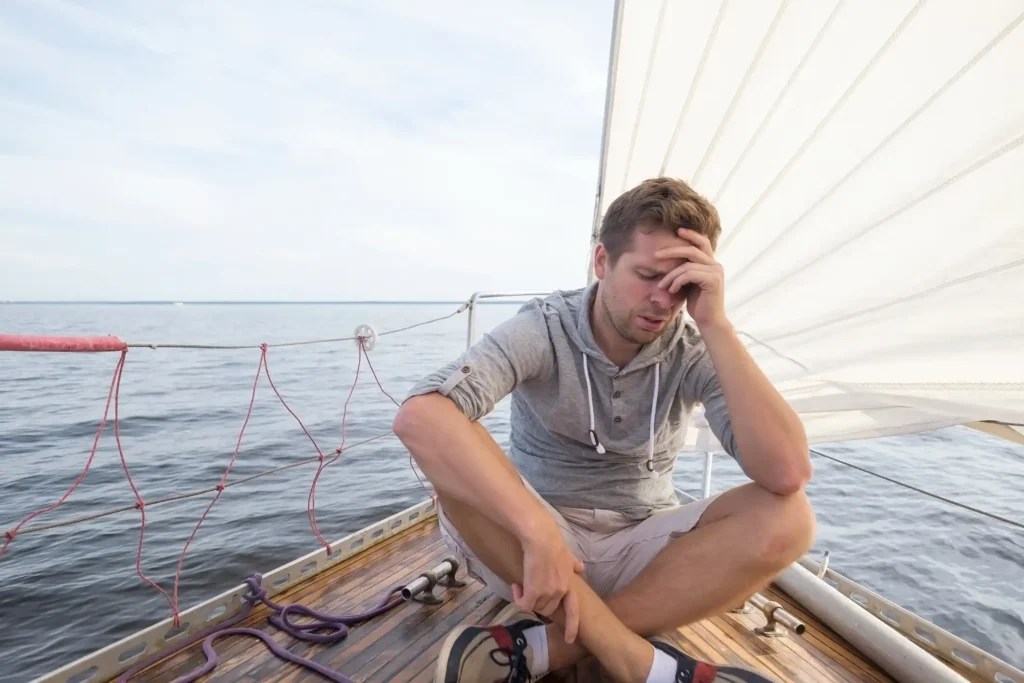
Most guests do not get seasick on a Fort Lauderdale charter, since trips typically stay in protected intracoastal waterways or calm nearshore water rather than rough open ocean. Guests prone to motion sickness can further reduce risk with simple prevention steps — fresh air, watching the horizon, and an over-the-counter remedy if needed.
“Will I get seasick?” is one of the most common hesitations we hear from first-time charter guests, and it’s usually less of a concern than people expect.
Key Takeaways
- Most Fort Lauderdale charters stay in protected intracoastal or calm nearshore water, not rough open ocean.
- Guests prone to motion sickness on ferries or cruise ships are the most likely group to feel anything.
- Simple prevention (fresh air, horizon-watching, light meals, OTC remedies) resolves it for most guests.
- Conditions can vary by trip type — worth asking your specific route if you’re especially concerned.
Why is Fort Lauderdale generally calmer than open ocean?
Many Fort Lauderdale charters travel through the Intracoastal Waterway and protected nearshore areas rather than heading straight into open Atlantic swell, which makes for a noticeably gentler ride than a deep-sea fishing trip or offshore excursion. This is a large part of why seasickness is less common on a typical charter than people assume.
Who is actually at risk of seasickness?
Motion sickness comes from a mismatch between what your inner ear feels and what your eyes see — people who get queasy on ferries, cruise ships, or reading in a moving car are the most likely group to feel something on any boat, including calmer charter routes. If that’s you, it’s not a reason to skip booking, just a reason to take a few minutes of prevention beforehand.
What can you do to prevent it?
- Stay on deck and get fresh air rather than staying below.
- Watch the horizon, not your phone.
- Eat something light beforehand — not on an empty stomach, not a heavy meal either.
- Consider an OTC remedy (ginger chews, Dramamine, Bonine) 30–60 minutes before boarding if you’re prone to motion sickness.
- Sit toward the center of the boat, where movement is felt the least.
Does boat type change the seasickness risk?
Slightly — a larger, more stable yacht typically feels steadier than a smaller vessel, and calmer trip types (like a sunset cruise in protected water) generally feel gentler than an open-water excursion. If weather adds chop to the water, that’s a separate factor covered in our weather policy guide.
Does this affect party boats and pontoons differently than yachts?
Not fundamentally — pontoons and party boats also typically operate in protected water for most Fort Lauderdale itineraries, so the same general calm-water logic applies across most charter types, including the tiki boat and pontoon options covered elsewhere.
Bottom line
For the large majority of guests, a Fort Lauderdale charter is a smooth, comfortable ride, not a rough one — take the prevention steps above if you’re prone to motion sickness, and mention it to your captain so they can plan accordingly. Check current charter options and book here.
FAQ
Do most people get seasick on a Fort Lauderdale boat charter? No — most guests don’t experience seasickness, since typical Fort Lauderdale routes stay in protected or calm nearshore water rather than rough open ocean.
What should I do if I’m prone to motion sickness? Get fresh air on deck, watch the horizon instead of a screen, eat something light beforehand, and consider an OTC remedy like ginger chews, Dramamine, or Bonine about 30-60 minutes before boarding.
Does the type of boat affect seasickness risk? Slightly — larger, more stable vessels and calmer, protected-water routes generally feel gentler than smaller boats or open-water excursions.
Does weather affect the chance of getting seasick? Yes — rougher conditions can make any boat feel less steady, which is part of why weather is assessed before every trip regardless of vessel type.